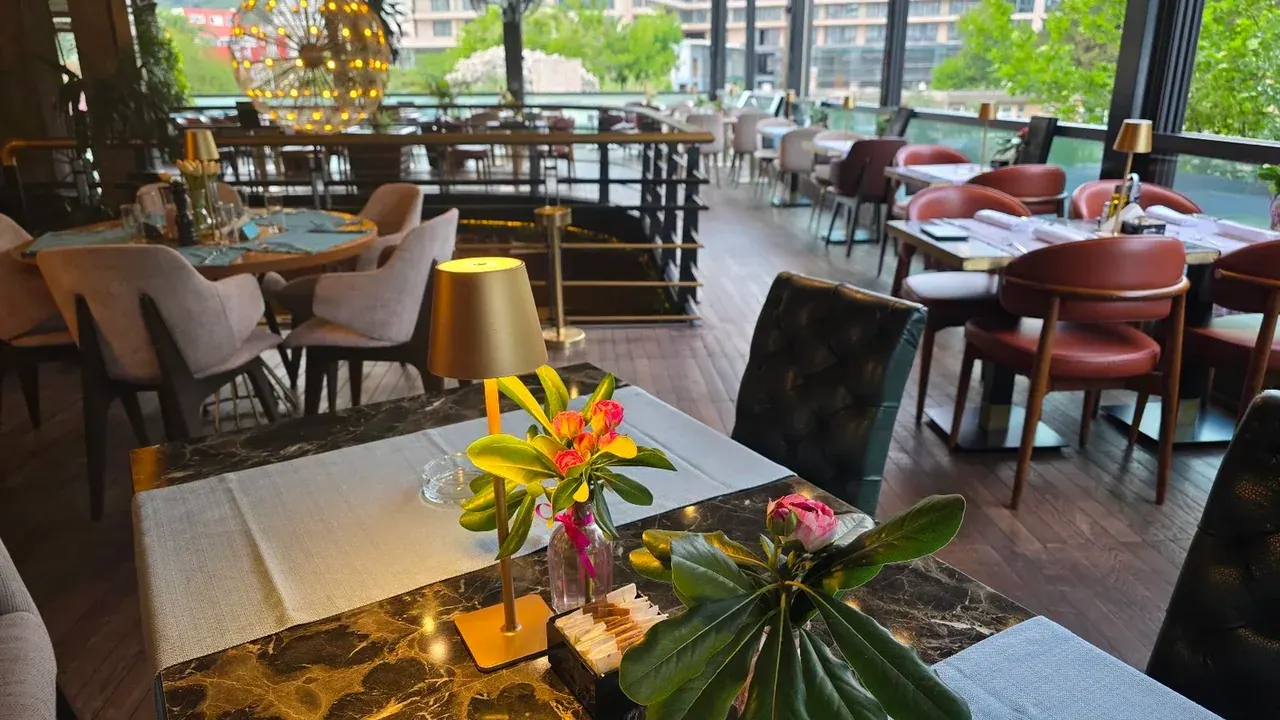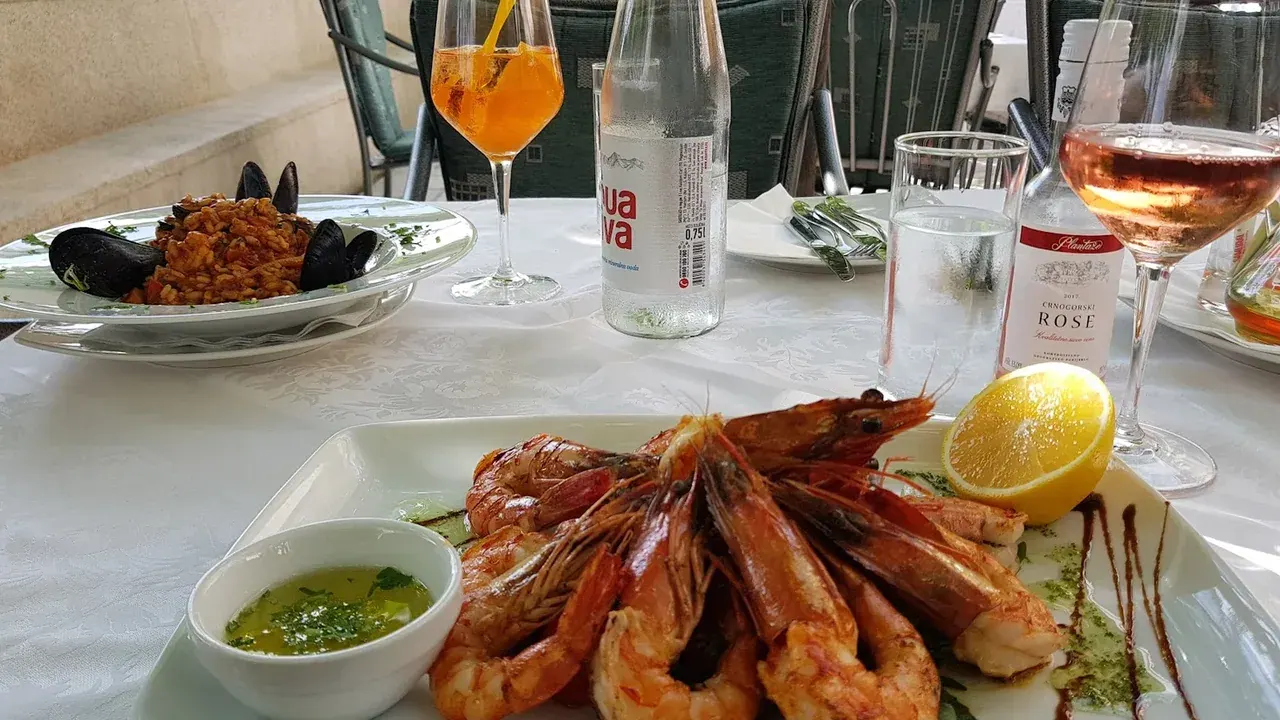
Montenegrin food splits neatly in two before you've even sat down: the coast eats Adriatic, grilled fish, shellfish, olive oil, risotto black with cuttlefish ink, while the mountains eat rich and smoky, all cured ham, clotted cream and cornmeal. Most of what you'll be offered around Bečići and the Budva Riviera leans seafood, but the best meals reach across both. Here's what to order, what it actually is, and how to read a menu so you eat like a local rather than a first-timer. For the local scene specifically, see our where to eat in Bečići guide.
Coast vs. mountains, at a glance
| The coast (Budva Riviera, Kotor Bay) | The interior (Njeguši, mountains) | |
|---|---|---|
| Star ingredients | Fresh fish, mussels, squid, olive oil | Cured ham, cheese, kajmak, cornmeal, lamb |
| Signature plates | Grilled fish, black risotto, buzara | Njeguški pršut, kačamak, cicvara, lamb under the bell |
| Feel | Light, briny, Mediterranean | Rich, smoky, hearty |
| Where you'll eat it | Seafront konobas | Village taverns, mountain stops |
In one line: if you eat only a handful of things in Montenegro, make them a plate of njeguški pršut, a bowl of buzara, and a properly black cuttlefish-ink risotto, then chase them with a glass of Vranac and, if offered, a shot of homemade rakija.
First, understand the konoba
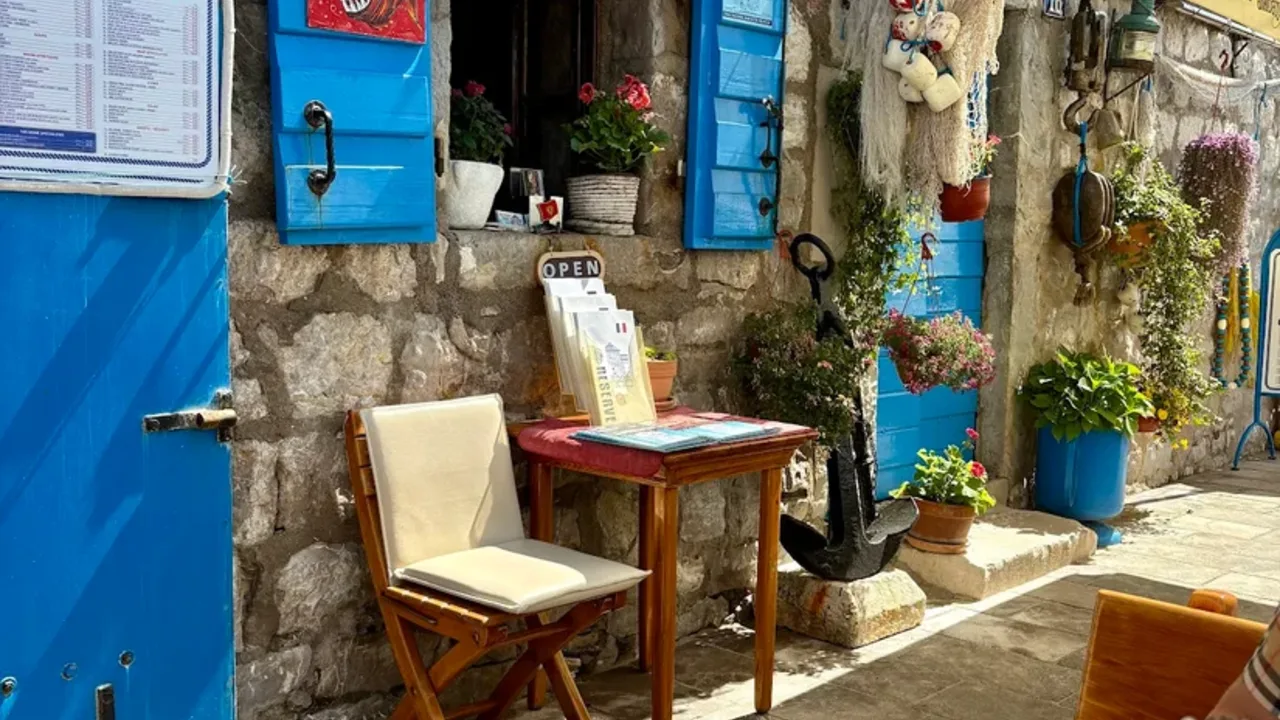
Before the dishes, the setting. A konoba is a traditional tavern, usually small, family-run, often with stone walls and wooden beams, and along this coast it's very often where the best food is, not the smartest-looking place on the square. Konobas price fish by the kilogram rather than the plate: the waiter brings the catch, you choose one, they weigh it, and the price follows. It surprises first-timers but it's a mark of freshness and transparency, just confirm the price before it hits the grill. A quick way to judge a konoba's seafood credentials is to ask how they do buzara, black risotto and octopus, the three plates locals use to separate the real kitchens from the tourist ones. Our own restaurants page is full of exactly these places.
The coastal classics
This is what you'll eat most of around Bečići, Rafailovići and Budva.
Fresh grilled fish
The coast's default and its glory: whole fish, sea bass, sea bream, dentex, grilled simply and dressed with olive oil, garlic and parsley, usually served with blitva (Swiss chard and potato). It's priced by weight, so a big fish for two costs more than a plated main; pick your fish, agree the price, and let it speak for itself.
Black risotto (crni rižot)
Rice cooked with cuttlefish ink until it's jet-black, briny and silky, studded with cuttlefish or squid. Montenegrin versions run generous and intense. It's the single best test of a seafood kitchen, order it early in the trip and let it set your expectations for everywhere else.
Buzara
The shellfish showpiece: mussels, prawns or clams cooked in a fragrant broth of garlic, olive oil, white wine and parsley (a red, tomato-based version also exists). The best versions lean on mussels from the Bay of Kotor, prized for being plump and sweet. The broth is the whole point, order bread and don't leave a drop.
Octopus under the bell
Hobotnica ispod sača, octopus (or lamb, or veal) slow-cooked under a metal bell buried in embers, a technique that turns tough cuts meltingly tender. It often needs ordering ahead because of the long cook, but it's one of the most distinctive things you can eat here.
The mountain and national dishes
Even on the coast, these interior specialities turn up on menus, and they're worth seeking out.
Njeguški pršut and njeguški sir
Montenegro's proudest export: njeguški pršut, a dry-cured, lightly smoked ham from the highland village of Njeguši, at the foot of Mount Lovćen above Kotor Bay. The ham owes its character to the village's rare microclimate, where cold mountain air meets the salty sea breeze rising off the bay, as it is air-dried and cold-smoked over beechwood for around a month, then sliced thin. Njeguši is also the ancestral home of the Petrović-Njegoš royal dynasty and the birthplace (1813) of the poet-prince Njegoš. It's almost always served with njeguški sir (the local cheese) and often olives and bread, the definitive Montenegrin starter, and a natural match for a glass of red.
Kačamak, cicvara and kajmak
Comfort food from the highlands. Kačamak, often called the national dish, is a thick, creamy porridge of cornmeal and potato enriched with cheese and kajmak (a rich, clotted dairy cream). Cicvara is its smoother, more buttery cousin, cornmeal cooked with fresh cheese and kajmak to a near-fondue consistency. Rich, warming and unmistakably mountain food. Try them at least once, ideally inland.
Ćevapi and pljeskavica
The Balkan grill staples: ćevapi (little skinless grilled minced-meat sausages) and pljeskavica (a large, flat grilled patty), both usually served with flatbread, raw onion and ajvar (red-pepper relish) or kajmak. Cheap, filling, everywhere. The reliable casual lunch when you want a break from seafood.
Börek and the bakery run
The everyday breakfast and snack across Montenegro is börek (burek), flaky filo pastry coiled around cheese, meat, spinach or potato, sold by weight from bakeries and often eaten with a drinking yoghurt. It's cheap, hot and everywhere, and it's what to grab on the way to the beach or an early bus. Bakeries also turn out other filo pies and simple pastries that make a fine, low-cost breakfast when you're not tied to a hotel buffet, a useful thing to know if you're self-catering around Bečići.
A coast shaped by its neighbours
Part of what makes Montenegrin food feel familiar yet distinct is its geography. The coastline from Herceg Novi down to Ulcinj shares a culinary grammar with the Dalmatian and Italian coasts across the Adriatic, hence the risottos, the olive oil, the grilled fish, while the interior carries Ottoman and Balkan influences in its grills, filo pastries and rich dairy. Eat your way from a seafront konoba to a mountain tavern and you cross that line on the plate: briny and Mediterranean by the water, smoky and hearty in the hills. It's a small country to eat across, and doing both is easily done on a coastal base like Bečići with a day trip inland.
Sweets and drinks
- Priganice, small balls of fried dough served with honey, jam or cheese; a traditional gesture of hospitality, especially in the mountains.
- Rakija, the region's fruit brandy, frequently homemade and offered as a welcome (or a digestif). Strong; treat it with respect.
- Vranac, Montenegro's flagship red wine, deep and robust, made for grilled meat, lamb and cured ham. Krstač is the local white to look for with fish.
What to eat where
| Craving… | Order | Best found… |
|---|---|---|
| The sea | Grilled fish, buzara, black risotto | Seafront konobas (Rafailovići, Budva) |
| A classic starter | Njeguški pršut and cheese | Almost anywhere; best from Njeguši |
| Comfort food | Kačamak, cicvara | Mountain and village taverns |
| A quick, cheap lunch | Ćevapi, pljeskavica | Grills and casual spots |
| Something sweet | Priganice with honey | Village stops and mountain roads |
For the dishes tied to this stretch of coast specifically, see our what to eat page, and for the seafood spots nearest Bečići, our best seafood in Bečići & Rafailovići guide.
Tips for eating well
- Confirm fish prices by weight before ordering. Always, everywhere. It's standard practice, not a special request.
- Order octopus (or lamb) under the bell ahead if you want it. The slow cook means it's often not available on the spot.
- Ask locals for the konoba, not the restaurant. The best cooking tends to hide in the small, family-run places, not the flashiest terrace.
- Pace the rakija. It's generous and homemade; one welcoming shot is hospitality, three is a lost afternoon.
- Bring cash. Smaller konobas prefer euros, even where cards are taken, and Montenegro uses the euro.
Frequently Asked Questions
What is the national dish of Montenegro?
Kačamak is widely considered Montenegro's national dish, a thick, creamy cornmeal-and-potato porridge enriched with cheese and kajmak (clotted cream). It's hearty mountain comfort food. On the coast, though, the defining plates are seafood: grilled fish, buzara and black risotto made with cuttlefish ink.
What seafood should I try in Montenegro?
Order the three coastal classics: grilled whole fish (dressed with olive oil, priced by weight), buzara, mussels or prawns in a garlic-and-wine broth, ideally with Bay of Kotor mussels, and black risotto made with cuttlefish ink. Octopus slow-cooked "under the bell" is another standout worth ordering ahead.
What is njeguški pršut?
Njeguški pršut is Montenegro's celebrated dry-cured ham from the highland village of Njeguši, above Kotor Bay. It's air-dried in mountain winds and cold-smoked over beechwood, then sliced thin and served with local cheese, olives and bread. It's the classic Montenegrin starter and pairs beautifully with a Vranac red.
What should I drink in Montenegro?
Look for Vranac, the flagship robust red wine, with grilled meat and cured ham, and Krstač, the local white, with fish. Rakija, homemade fruit brandy, is often offered as a welcome or digestif and is very strong. Montenegro uses the euro, and local wines are good value.
What is a konoba in Montenegro?
A konoba is a traditional, usually family-run tavern, small, often stone-walled, and along the coast it's frequently where the best food is found. Konobas price fish by the kilogram rather than the portion, a mark of freshness. Ask how they cook buzara and octopus to gauge the kitchen. See our restaurants page for local examples.