Ask three guidebooks what Bečići Beach is made of and you will get three answers — sand, pebbles, or something in between — and the sunbed prices they quote range from €10 to €50 for the same two loungers. That spread is not sloppiness. It comes from a real feature of how this beach is run, and once you understand it you can predict almost exactly what your day here will cost and which end of the bay you want to be on. Here is what nearly two kilometres of Montenegrin coast is actually like, and what the disagreement is really about.
At a glance
| Detail | |
|---|---|
| Length | 1,950 m — one of the longest beaches on the Adriatic coast |
| Surface | Sand, mixed with fine gravel and small pebbles in places |
| Sunbed + umbrella | ~€10–15 per set of two (among the Riviera's better value) |
| Free sections | Yes — public stretches between and beside the paid blocks |
| Parking | €5–10 in the lots along the Adriatic highway |
| Water entry | Gentle, shallow shelf; lifeguards through the season |
| Walk to Budva Old Town | ~2.5–3 km north-west along the promenade, about 30 min |
| Walk to Rafailovići | ~15 min south-east, at the far end of the bay |
| Visitor rating | 4.4 from 1,096 reviews |
Is Bečići Beach sandy? The honest answer
Yes — and this is the single most-asked question about the place, so it is worth being precise rather than reassuring.
Bečići is genuinely a sandy beach, which on this coastline is rare enough to be the reason the resort exists at all. Most of the Montenegrin littoral is shingle and pebble; Bečići is the exception, and in 1935 it won a Grand Prix in Paris as the most beautiful beach in Europe largely on the strength of it.
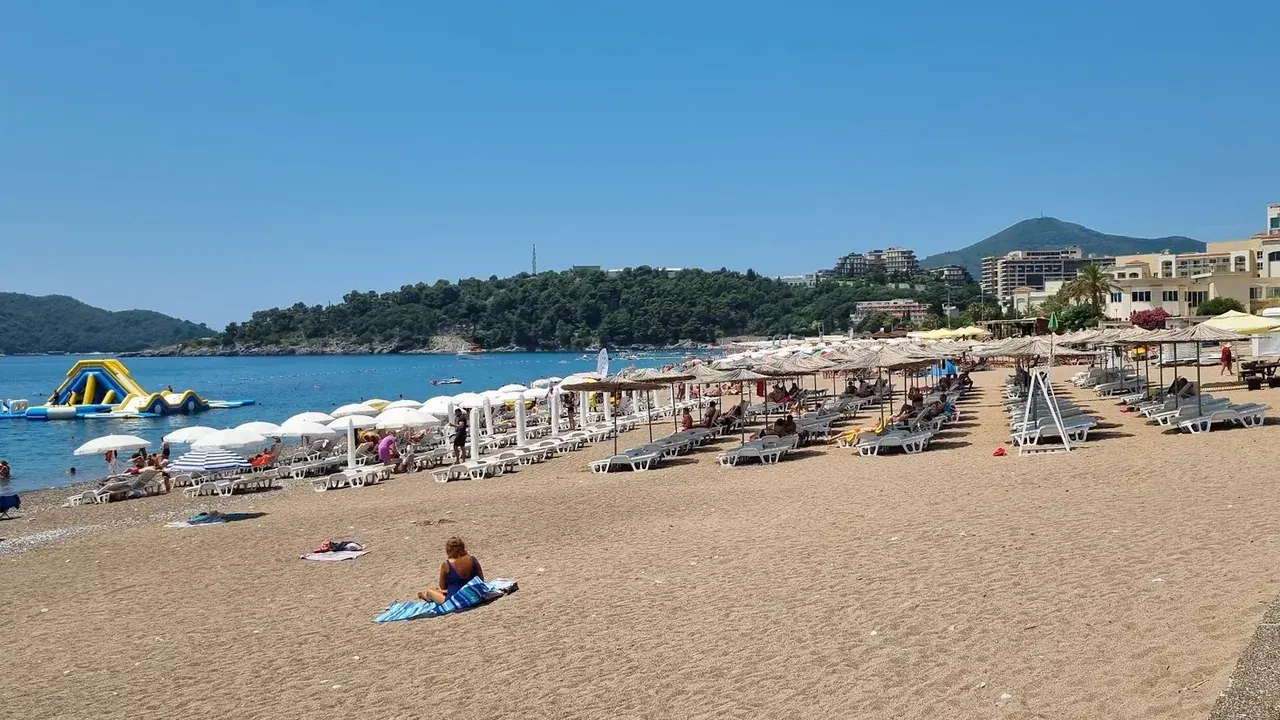
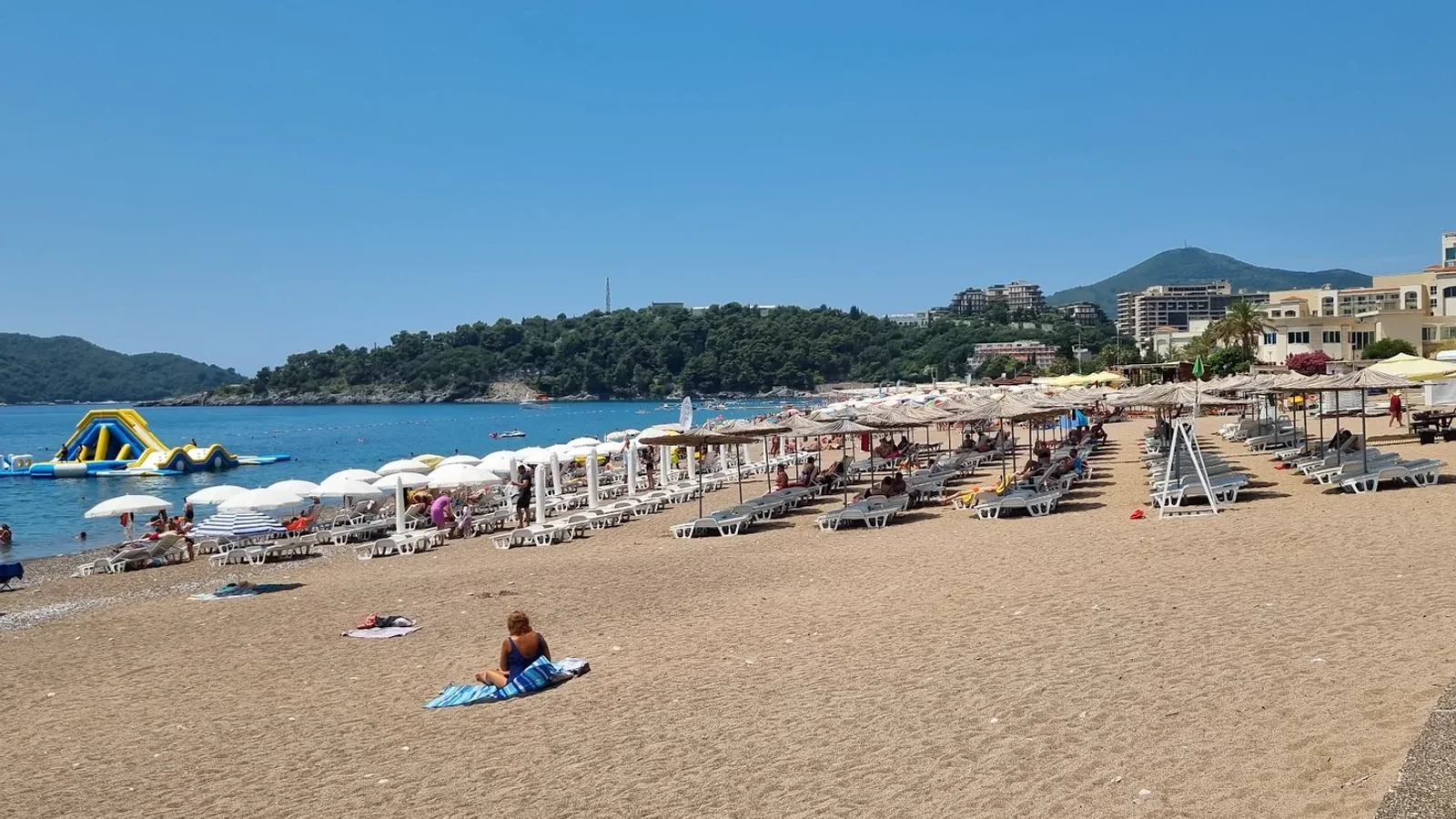
But it is not the powder-fine sand of the Adriatic's Italian side. The strand is sand mixed with fine gravel and small pebbles, and the proportion shifts as you move along the bay — finer and softer in the central resort section, coarser toward the ends. That is why one writer calls it sandy and the next calls it pebbly: both walked a different 300 metres of the same beach.
What it means in practice:
- Barefoot comfort is good but not perfect — most people are fine; the sensitive-footed are happier in the middle section.
- The shelf is gentle and shallow, which is the real reason it works for families with small children — more so than the surface does.
- The water is clear, and calmer than the exposed beaches north and south of the bay, because the headlands shelter it.
If you want the softest sand on the Riviera, this is still your best bet within walking distance. If you want a dramatic cliff-backed cove instead, Mogren is a half-hour walk past Budva's old town.
What a day actually costs
The sunbed spread that confuses every comparison has a simple explanation: in Montenegro the beach itself is public by law. The concession rents you the furniture and the service, not the ground. So the price you pay depends entirely on which operator's block you sit in — and the same beach carries several, at different tiers.
| Where you sit | Typical 2026 price | What you get |
|---|---|---|
| Standard concession set | €10–15 per set of two + umbrella | Tidy row, shared umbrella, attendant |
| Front-row / hotel-linked block | €20–50 per set | Cushioned loungers, table service, prime position |
| Free public section | €0 | Your own towel, no facilities |
| Parking | €5–10 per day | Lots along the Adriatic highway |
The €10–15 band is the one to plan around — Bečići sits at the better-value end of the Budva Riviera, and it is noticeably cheaper than Slovenska Plaža in Budva itself at €15–25. The €40–50 figures you will find quoted elsewhere are real, but they describe the front-row hotel blocks, not the beach as a whole. Our full Budva Riviera sunbed price guide breaks the tiers down beach by beach.
The free sections are not a grudging afterthought either. They sit between and beside the paid blocks, typically toward the ends of the bay, and on a weekday in June you can have a lot of space for nothing. Bring your own umbrella — shade is the thing you actually miss, not the lounger.
The Blue Flag question
Bečići is routinely described as a Blue Flag beach, and that is broadly right — but the detail matters more than the badge.
Blue Flag is awarded to individual managed sections, not to a whole coastline. On Bečići the certified stretches are reported to be the concession-run blocks — names including Dolcevita, Sveti Toma, Samsara Deluxe, Bella Vista and Olympic — rather than the full 1,950 m end to end. So "Bečići Beach has a Blue Flag" and "every part of Bečići Beach has a Blue Flag" are different claims, and only the first is safe.
Two further caveats worth carrying: the award is annual and revocable, so a section certified last summer is not automatically certified this one, and the criteria cover water quality, safety provision and beach management — they are not a ranking of how nice the sand is. Check the flag actually flying over the block you are sitting in; that is the only current source there is.
Where on the beach to be
Nearly two kilometres is long enough that the choice of end genuinely changes your day.
- The central resort section — in front of the big hotels. Softest sand, most facilities, most crowded, easiest for a first visit. This is where the water park inflatable sits in high season.
- The south-east end, toward Rafailovići — the beach narrows and runs into the fishing village, where the seafront tavernas are noticeably better value than the resort strip. About 15 minutes on foot.
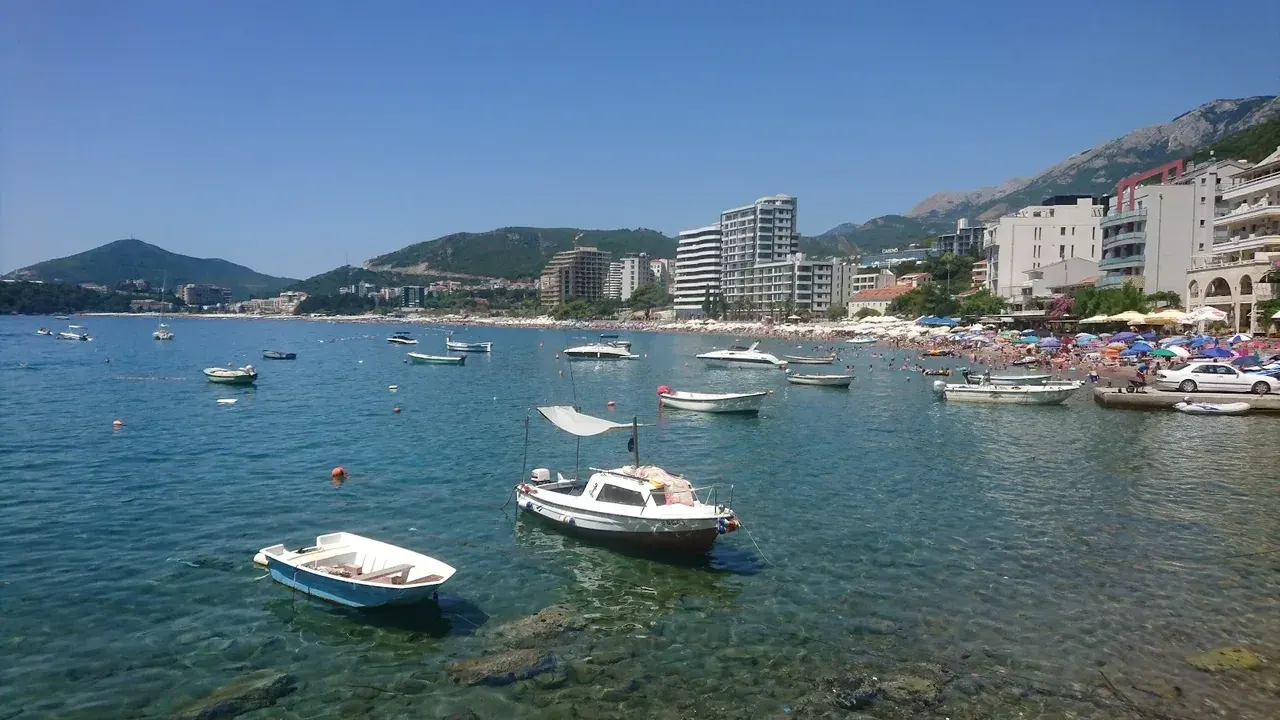
- The north-west end, toward Budva — quieter, coarser underfoot, and the start of the promenade that carries on around the headland into Budva, roughly 2.5–3 km and half an hour's flat walk along the water.
For the timing: get down before 09:30 in July and August if you want a front row without paying the front-row price. Late afternoon is the other good window — the light is better, the sea is at its warmest, and the day-trippers have gone. Our best time to visit Bečići guide covers the month-by-month picture.
Come evening, the beach bars along the sand are the town's centre of gravity; see where to drink on the sand. If you are here with children, the shallow entry plus the Mediteran aqua park behind the beach is the combination most families end up building their week around.
Frequently Asked Questions
Is Bečići Beach sandy or pebbly?
It is genuinely sandy — unusual on a Montenegrin coast that is mostly shingle — but mixed with fine gravel and small pebbles, and the proportion changes along the bay. The central resort stretch is the softest underfoot; the ends are coarser. That variation is why published descriptions disagree with each other.
How much does a sunbed cost on Bečići Beach?
Budget €10–15 in 2026 for a standard set of two loungers and an umbrella, which is better value than most of the Budva Riviera. Front-row and hotel-linked blocks charge €20–50 for the same furniture in a better position. Free public sections exist between the paid blocks.
Can you walk from Bečići Beach to Budva?
Yes. The seafront promenade runs the full length of the beach and continues north-west around the headland into Budva Old Town — about 2.5–3 km, roughly 30 minutes on the flat, right along the water. Rafailovići lies the opposite way, south-east, about 15 minutes on foot.
Why is Bečići Beach famous?
It won a Grand Prix in Paris in 1935 as the most beautiful beach in Europe, and that reputation built the resort. At 1,950 m it is one of the longest beaches on the Adriatic, and its combination of sand, a gentle shelf and a mountain backdrop is genuinely uncommon on this coast.
Is Bečići Beach free?
The beach itself is public — Montenegrin law makes the shoreline free to access, and the concessions rent you furniture rather than ground. There are free sections between and beside the paid blocks, usually toward the ends of the bay. Bring your own towel and shade and a beach day costs nothing.
For the full entry on the beach as a landmark — coordinates, gallery and opening details — see Bečići Beach. For the wider coast, see the best beaches on the Budva Riviera.