Ask when the Adriatic is at its best and the answer surprises a lot of first-timers: not July, but September, once the sea has soaked up a whole summer of heat and the coach crowds have gone home. On the Budva Riviera, Bečići, Budva, Sveti Stefan, early autumn hands you warm water, comfortable days and noticeably lower prices, with the trade-off that the season's first proper rain tends to arrive later in the month. Here's what a September trip typically looks like, and how to plan around it. For the year in full, see our best time to visit Bečići guide.
At a glance: Montenegro in September
| Typical September | |
|---|---|
| Daytime high | Around 23–27°C, easing over the month |
| Overnight low | Around 14–18°C |
| Sea temperature | Roughly 23°C, still warm from summer |
| Rain / sun | Mostly sunny early on; rain returns later, ~7–8 wet days |
| Crowds | Thinning after the August peak, calmer by mid-month |
| Prices | Falling from peak; shoulder-season rates |
| Verdict | Prime shoulder season, warm sea, fewer people |
The short version: early September still feels like summer, with a warm sea and hot afternoons; by late September the crowds have thinned, prices have dropped and the weather turns more changeable. If your idea of a good beach holiday includes room to breathe, this is arguably the best month of the year here, just pack for the odd shower.
The weather: summer's warmth, gently fading
September on the Budva Riviera is a month of two halves. Early September is effectively an extension of August (and shades into the quieter October shoulder-end). Expect highs in the high-20s Celsius, hot sun and long, warm evenings. As the weeks pass, daytime highs typically ease from around 27°C to the low-20s, and nights cool to a comfortable mid-to-high teens, which is a relief if August's mugginess isn't your thing.
The catch is rain. After the dry heart of summer, September is when Adriatic autumn rains start to return, figures vary a lot year to year, but reputable climate records put the month among the wetter of the warm season, typically across seven to eight rainy days. These often come as short, heavy bursts or evening thunderstorms rather than all-day drizzle, so they rarely wreck a trip, but the risk is real, and it climbs as the month goes on. Early September is the safer bet for near-guaranteed sun.
The sea: the warmest water of the year
Here's September's headline. The Adriatic warms slowly through spring and early summer, so it lags the air, which means the sea is at its warmest not in peak July but in late August and September, after months of absorbing heat. Through September the water typically sits around 23°C, warm enough for long, easy swims without the sharp intake of breath you get in June.
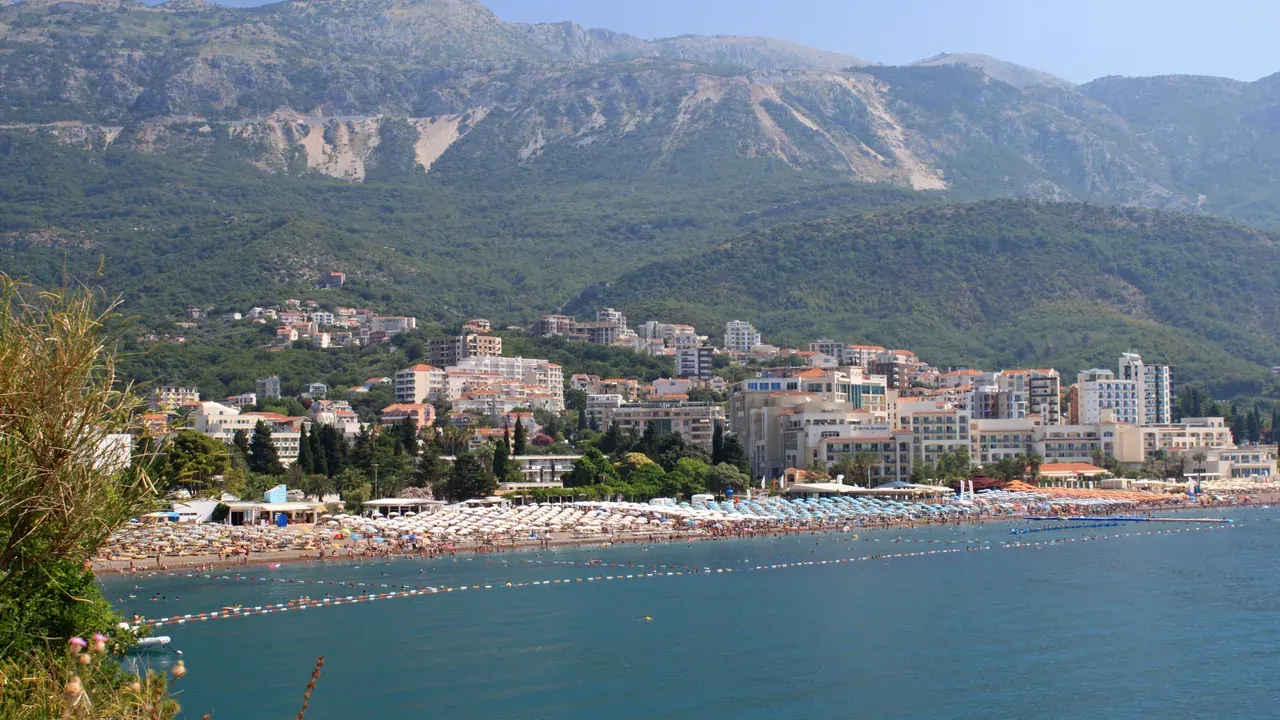
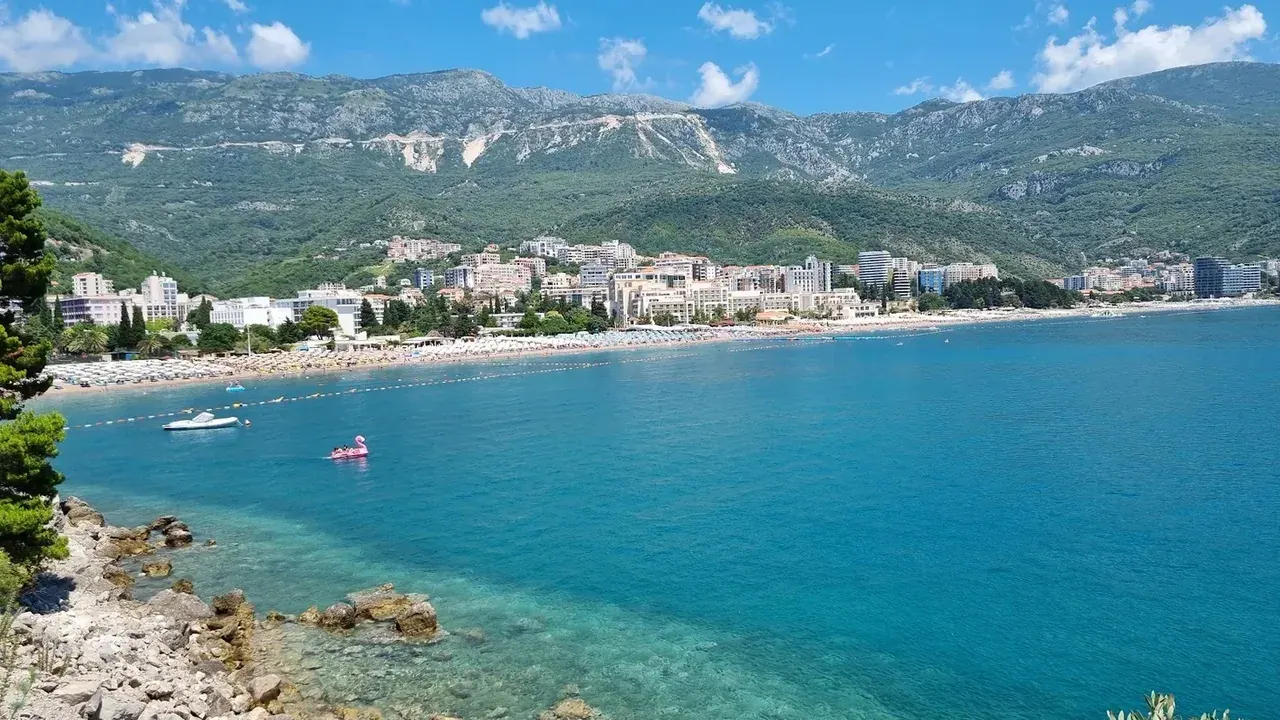
Combine that warm sea with thinner crowds and you get the month's whole appeal: the same swimmable water as high summer, but with space on the sand. Bečići's roughly 2 km sandy crescent spreads people out even in August, and by September it feels genuinely relaxed. For where to swim up and down the coast, see our best beaches on the Budva Riviera.
Crowds and prices: the shoulder-season sweet spot
The practical reason to come now is what happens after the peak breaks. European school holidays end, the August crush eases, and through September the resort steadily quietens, early September still busy, late September noticeably calm. That feeds straight into cost: accommodation prices drift down from their July–August high, and you'll find better availability and rates than at peak. It's the classic shoulder-season trade, a little more weather risk in exchange for fewer people and more value. For picking a base, see our where to stay in Bečići guide.
September vs the other good months
Bečići's best stretches are late spring and early autumn. Here's how September compares with its shoulder-season siblings and the peak:
| Month | Typical high | Sea | Crowds | Best for |
|---|---|---|---|---|
| May | ~20–24°C | ~18°C | Quiet | Green scenery, low prices, cool sea |
| June | ~24–28°C | ~21°C | Building | Long days, warming sea, pre-peak |
| July–Aug | ~30–31°C | 24–25°C | Peak | Hottest, busiest, priciest |
| September | ~23–27°C | ~23°C | Thinning | Warmest sea + fewer people |
The takeaway: May gives you the quietest, greenest coast but a cool sea; September gives you a warm sea and a relaxed one, for swimmers, September usually wins. June sits between them, and July–August is for those who actively want the heat and the buzz.
What's open in September
This is a strong month for opening hours. Because early autumn is still firmly part of the season, the resort is essentially fully open, beach bars, seafront restaurants, sun-lounger operators, boat trips and day tours all run through September, with things only starting to wind down towards the very end of the month and into October. Neighbouring Budva, Montenegro's liveliest coastal town, stays busy well into autumn, so evenings out are easy even as Bečići itself calms down. Day-trip operators to Kotor, Perast and beyond keep running too. For what to do beyond the beach, browse our things to do.
What to do
- Swim while the water's warm. September's warm sea is the whole point, make the most of it before October cools it off.
- Take the day trips in comfort. With the fierce midday heat of August behind you, September is a more pleasant month for the UNESCO Bay of Kotor and inland excursions, walking Kotor's city walls is far kinder at 25°C than 33°C.
- Walk the coast. The flat seafront promenade linking Bečići to Budva (~3 km) and Rafailovići is at its best in mild early-autumn air.
- Eat by the water without a wait. Thinner crowds mean the seafront konobas are easier to get into. See where to eat in Bečići.
- Catch the tail of the sun on Sveti Stefan. The iconic islet just south photographs beautifully in softer September light. See our Sveti Stefan guide.
What to pack
Pack for warm days and the chance of a shower. Bring your normal summer kit, swimwear, high-SPF sunscreen (UV is still strong in early September), a hat and sunglasses, but add a light layer for cooler evenings, especially late in the month, and a compact rain jacket or travel umbrella for those autumn downpours. Comfortable walking shoes earn their place if you're doing Kotor's walls or Budva's old town. Montenegro uses the euro, and note it's not in the EU, so check your mobile roaming before you rely on data. Our practical info page covers the essentials.
The verdict
For most travellers, September is the pick of the year on the Budva Riviera. The sea is at its warmest, the crowds have thinned from the August peak, prices are on their way down, and the resort is still fully open. You accept a bit more weather risk than midsummer, and that risk grows as the month runs on, so early-to-mid September is the sweet spot within the sweet spot. Come for warm swims and elbow room; pack a rain layer just in case.
Frequently Asked Questions
Is September a good time to visit Montenegro?
For most people, yes. It's one of the best. On the Budva Riviera you typically get warm days around 23–27°C, a sea still around 23°C from the summer, and noticeably thinner crowds and lower prices than the July–August peak. The main trade-off is that autumn rain becomes more likely as the month goes on.
Is the sea warm enough to swim in September in Montenegro?
Yes. The Adriatic warms slowly through summer, so it's actually at its warmest in late August and September, typically around 23°C off the Budva Riviera. That's comfortable for long swims, and warmer than June's water, which is one of the main reasons September is such a strong month for a beach trip.
How busy is Montenegro in September?
Much quieter than peak summer. Early September is still fairly busy as it follows straight on from August, but crowds thin steadily through the month as European school holidays end. By late September the beaches, restaurants and promenade feel genuinely relaxed, while neighbouring Budva stays lively into the autumn.
Does it rain a lot in Montenegro in September?
Some. After the dry heart of summer, September is when Adriatic autumn rains begin to return, typically around seven to eight rainy days, often as short heavy bursts or evening storms rather than all-day rain. Early September is usually drier and more reliably sunny; the risk climbs later in the month.
September or May for Montenegro?
It depends on what you want. September gives you a warm sea (~23°C) and the relaxed feel of a fading season, so it's the better swimming month. May is greener, quieter and cheaper, but the sea is still cool (~18°C) for swimming. Choose September for the water, May for the calm and the low prices.