High summer on the Budva Riviera is a study in trade-offs: the sea is at its most inviting and the coast at its most alive, but you're sharing both with the biggest crowds of the year, in the fiercest heat, at the highest prices. July and August are what most people picture when they picture Montenegro, packed golden beaches, warm turquoise water, late nights in Budva, and they deliver exactly that, intensely. Come prepared and it's a brilliant beach summer; come unprepared and the heat and queues can wear you down. Here's how to do peak season well. For the year in context, see our best time to visit Bečići guide.
At a glance: Montenegro in July & August
| Typical July–August | |
|---|---|
| Daytime high | Around 30–31°C, often pushing past 30°C |
| Overnight low | Around 20–21°C, warm, humid nights |
| Sea temperature | 24°C (July) to 25°C (August), warmest of the year |
| Rain / sun | Driest, sunniest months; occasional evening storm |
| Crowds | Peak, the busiest weeks of the year |
| Prices | Highest of the year; book well ahead |
| Verdict | Peak season, hottest, busiest, priciest |
The short version: July and August are hot, sunny and buzzing, with the warmest sea and the fullest beaches. If you want classic Adriatic summer and don't mind heat and crowds, this is your window, but book accommodation early, claim beach spots in the morning, and plan around the midday heat.
The heat: the hottest weeks of the year
July and August are Montenegro's hottest months. Daytime highs on the coast typically sit around 30–31°C and frequently climb past 30°C, with strong sun and humidity that makes it feel hotter still. Nights offer little respite, overnight lows around 20–21°C mean warm, sometimes sticky sleeping, so air conditioning is worth prioritising when you book.
The flip side is reliability: these are the driest, sunniest months of the year, with July often the driest of all. Rain is rare and usually confined to the odd evening thunderstorm. You're essentially guaranteed beach weather. The challenge isn't whether the sun shows up, it's managing how much of it you take. UV is at its strongest from June through September, and midday on an exposed beach is punishing.
Beating the heat
- Follow the locals' rhythm: beach and swim in the morning and late afternoon, retreat to shade or a siesta over the fierce midday hours (roughly 12–4pm).
- Save sightseeing for the cool ends of the day. Kotor's sun-trap city walls and Budva's old town are far kinder at 8am or 6pm than at noon.
- Hydrate and cover up: high-SPF sunscreen, a hat, sunglasses and water are non-negotiable.
- Book a pool. On the hottest afternoons a shaded hotel pool beats a crowded beach. Many resorts here have them.
The sea: warm as it gets
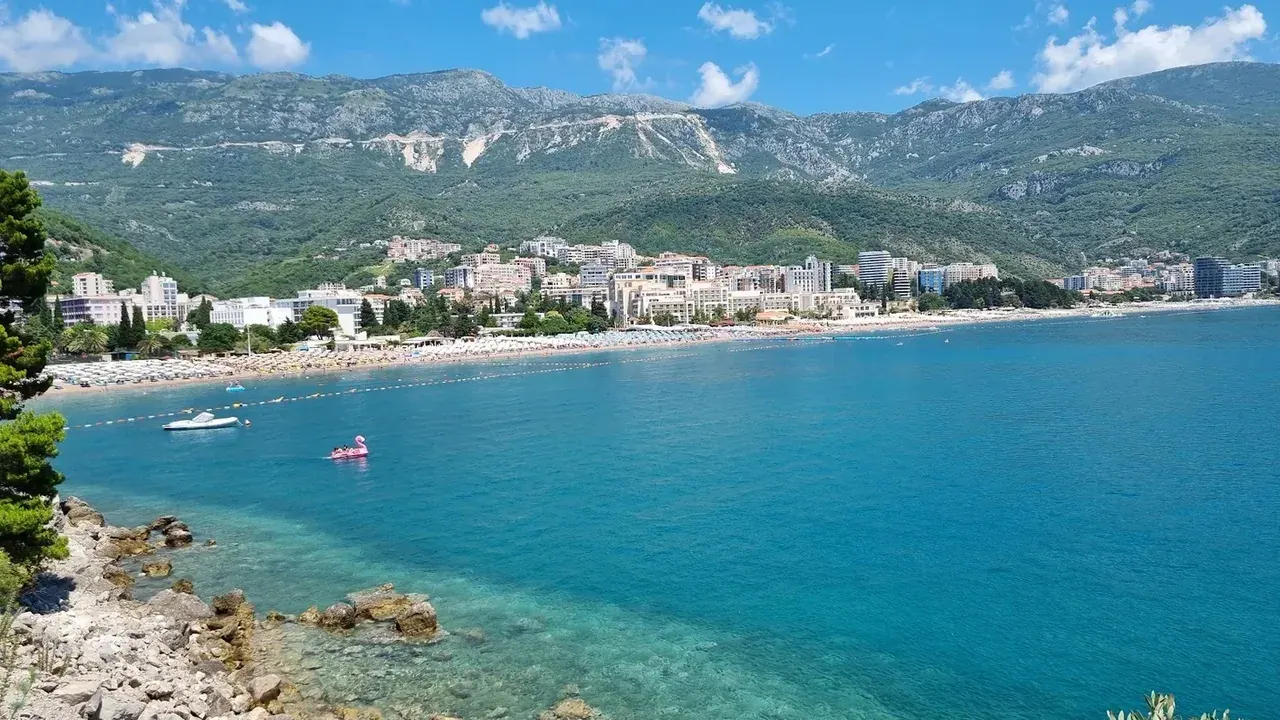
If there's a reward for the heat, it's the water. The Adriatic reaches its annual peak in high summer, warming to around 24°C in July and about 25°C in August, bath-warm by European standards and comfortable for hours of swimming. This is the water people rave about: clear, calm and genuinely inviting, lapping Bečići's long sandy beach. For the best swims along the coast, see our best beaches on the Budva Riviera.
The crowds: peak means peak
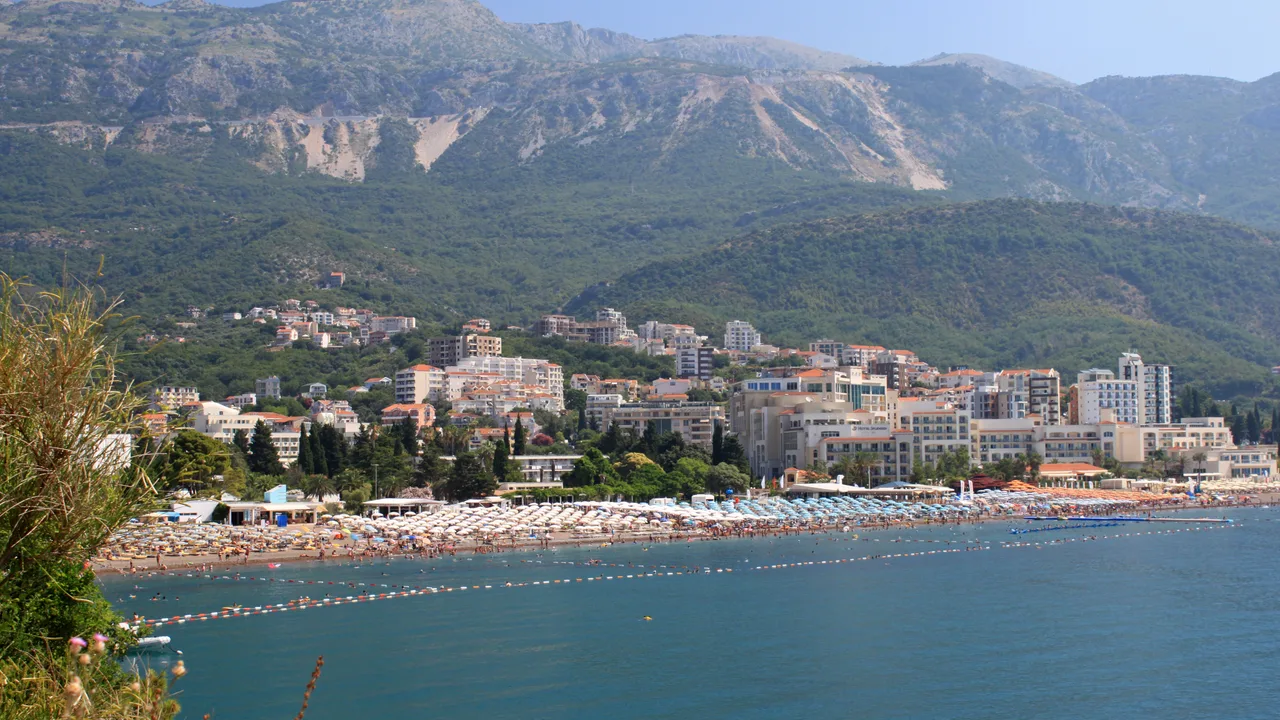
There's no softening it, July and August are the busiest weeks of the year on the Budva Riviera, and August is typically the busiest of the two, when European holidaymakers descend en masse. Beaches fill early, the seafront promenade is shoulder-to-shoulder in the evenings, and popular restaurants and day tours get booked out. A commonly cited rule of thumb for peak weeks: claim your paid sun-loungers by mid-morning or take what's left. Bečići's sheer beach length, a ~2 km crescent, helps spread the load, which is one reason it feels less frantic than Budva's shorter town beach, but it's still full.
Surviving the crowds
- Book everything ahead: accommodation months out, plus popular restaurants and day tours a few days ahead.
- Beat the rush to the sand: arrive early for a good spot and shade.
- Base in calmer Bečići, party in Budva. Bečići stays quieter at night than Budva's nightlife strip, and the two are linked by a flat ~3 km promenade. See Bečići vs Budva.
- Do day trips midweek if you can, when the biggest sights are marginally less mobbed.
The prices: the year's highest
Peak demand means peak prices. Accommodation, in particular, hits its annual high in July and August, and availability tightens the longer you leave it, so booking well in advance is essential, both to secure a room and to avoid the worst rates. Restaurants and beach services also charge peak-season prices. If your dates are flexible and you don't need the very warmest sea, the shoulder months are dramatically better value. See June, September and May. For choosing a base, see where to stay in Bečići.
Peak vs the shoulder months
| Month | Typical high | Sea | Crowds | Prices |
|---|---|---|---|---|
| May | ~20–24°C | ~18°C | Quiet | Low |
| June | ~24–28°C | ~21°C | Building | Rising |
| July–August | ~30–31°C | 24–25°C | Peak | Highest |
| September | ~23–27°C | ~23°C | Thinning | Falling |
The tell is stark: you pay the most, in money and heat and crowds, for the warmest sea and the liveliest scene. If those are what you're after, high summer is unbeatable. If not, September in particular gives you almost as warm a sea with far fewer people.
What's open: and what's on
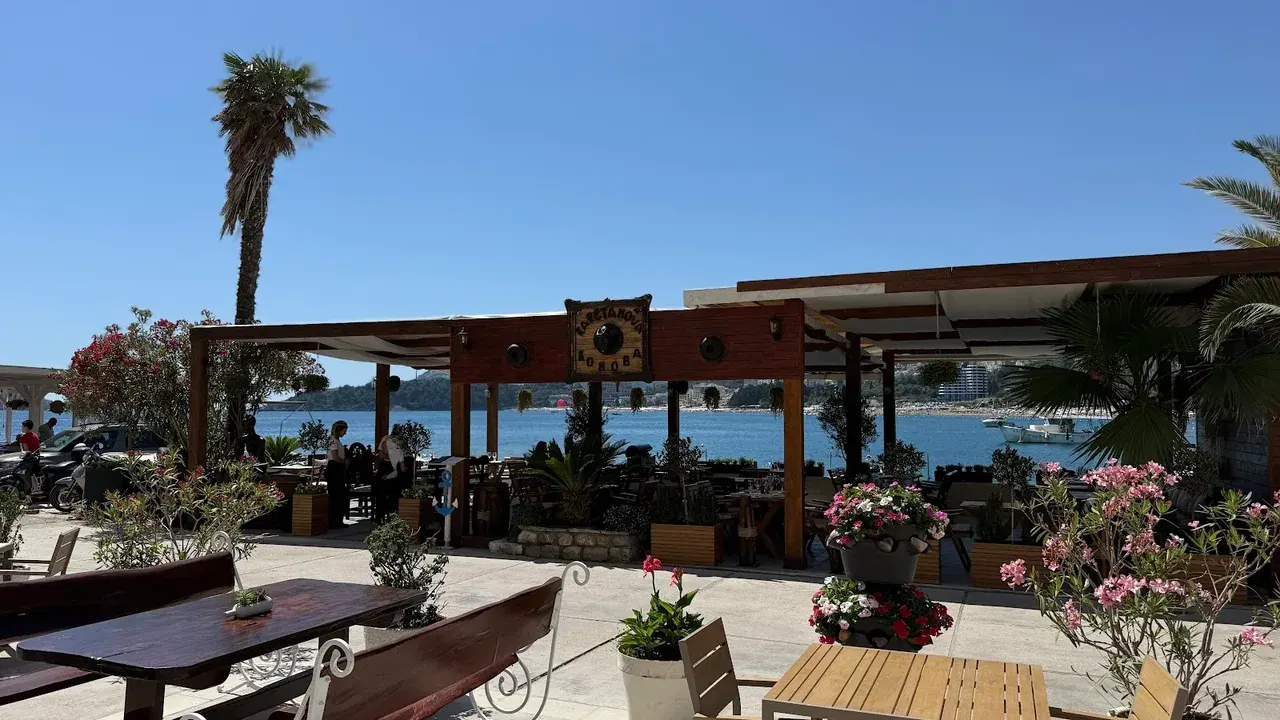
Everything, at full tilt. High summer is when the resort runs at maximum, every beach bar, restaurant, lounger operator, boat trip and day tour is open, often late into the night. This is also the coast's festival peak: Budva's flagship Grad Teatar ("Theatre City") cultural festival runs through July into late August, turning the old town's squares and walls into open-air stages for theatre and concerts, and at the very end of August the free Sea Dance Festival, the coastal sister of Serbia's EXIT, draws tens of thousands to the beach for four nights of big-name electronic acts (28–31 August in 2026). The nightlife strip is at its most raucous. There is simply more going on now than at any other time of year. See things to do and our nightlife guide.
What to pack
Pack for serious sun and heat. Bring plenty of swimwear, high-SPF sunscreen, a wide-brim hat, good sunglasses and a reusable water bottle, sun protection is the priority. Light, breathable clothing helps with the humidity, and you'll want comfortable shoes for early-morning or evening sightseeing. A light cover-up is handy for cooler sea breezes late at night. Montenegro uses the euro and sits outside the EU, so check mobile roaming before relying on data. Our practical info page has the essentials.
The verdict
July and August are peak season, for better and worse. You get the hottest weather, the warmest sea of the year (24–25°C) and a coast in full, festive swing, but you share it with the biggest crowds and pay the highest prices, in heat that demands respect. Do it well by booking early, working around the midday sun, claiming beach spots in the morning, and basing in calmer Bečići with Budva's buzz a short stroll away. Play it right and it's the classic Adriatic summer; play it wrong and the heat and queues will define your trip.
Frequently Asked Questions
How hot does Montenegro get in July and August?
On the Budva Riviera coast, daytime highs typically run around 30–31°C and frequently push past 30°C, with strong sun and humidity making it feel hotter. Nights stay warm at around 20–21°C, so air conditioning is worth prioritising. These are comfortably the hottest weeks of the year, with intense midday heat.
Is the sea warm in Montenegro in summer?
Very. The Adriatic peaks in high summer, reaching around 24°C in July and about 25°C in August. The warmest it gets all year. It's calm, clear and comfortable for hours of swimming, which is a big part of why July and August draw the biggest crowds to beaches like Bečići's long sandy crescent.
How crowded is Montenegro in July and August?
These are the busiest weeks of the year, with August typically the peak, as European holidaymakers arrive en masse. Beaches fill early, the promenade is packed in the evenings, and restaurants and tours book out. Base in Bečići, whose long beach spreads crowds out and whose nights are calmer than Budva's nightlife strip.
Should I book in advance for peak-season Montenegro?
Yes, well in advance. Accommodation hits its annual high and availability tightens through July and August, so booking early is essential to secure a room and avoid the worst prices. It's also wise to reserve popular restaurants and day tours a few days ahead, and to claim paid beach loungers by mid-morning.
Is it better to visit Montenegro in summer or the shoulder season?
It depends on your priorities. High summer gives the warmest sea and the liveliest scene, but the highest prices, biggest crowds and fiercest heat. The shoulder months, June and especially September, offer a nearly-as-warm sea with far fewer people and better value.