Trade the beach for a morning of monarchs and museums, and Cetinje repays it, Montenegro's old royal capital sits just up the mountain from the Budva Riviera, a low-rise town of former embassies, a working monastery and the palace of the country's last king. It's the easiest culture-heavy day trip from Bečići, close enough to pair with Lovćen or a plate of Njeguši ham on the way home. Here's how to plan it. For the wider set of trips, see our best day trips guide.
At a glance
| Detail | |
|---|---|
| From Bečići | Roughly 40–50 minutes each way by road |
| Distance | About 35 km via Budva |
| King Nikola Museum | Around €8 adult in 2026 |
| Combined museum ticket | Around €20 adult (all National Museum units) |
| Cetinje Monastery | Free (donations; modest dress) |
| Time needed | A relaxed half-day, or full day with Lovćen |
| How | Self-drive, taxi, or organised tour |
In short: Cetinje is a short, scenic drive inland. A half-day of royal history that pairs neatly with Lovćen National Park or the villages of Njeguši. Museums charge modest euro entry; the monastery is free but asks for covered shoulders and knees.
What Cetinje is: and why it matters
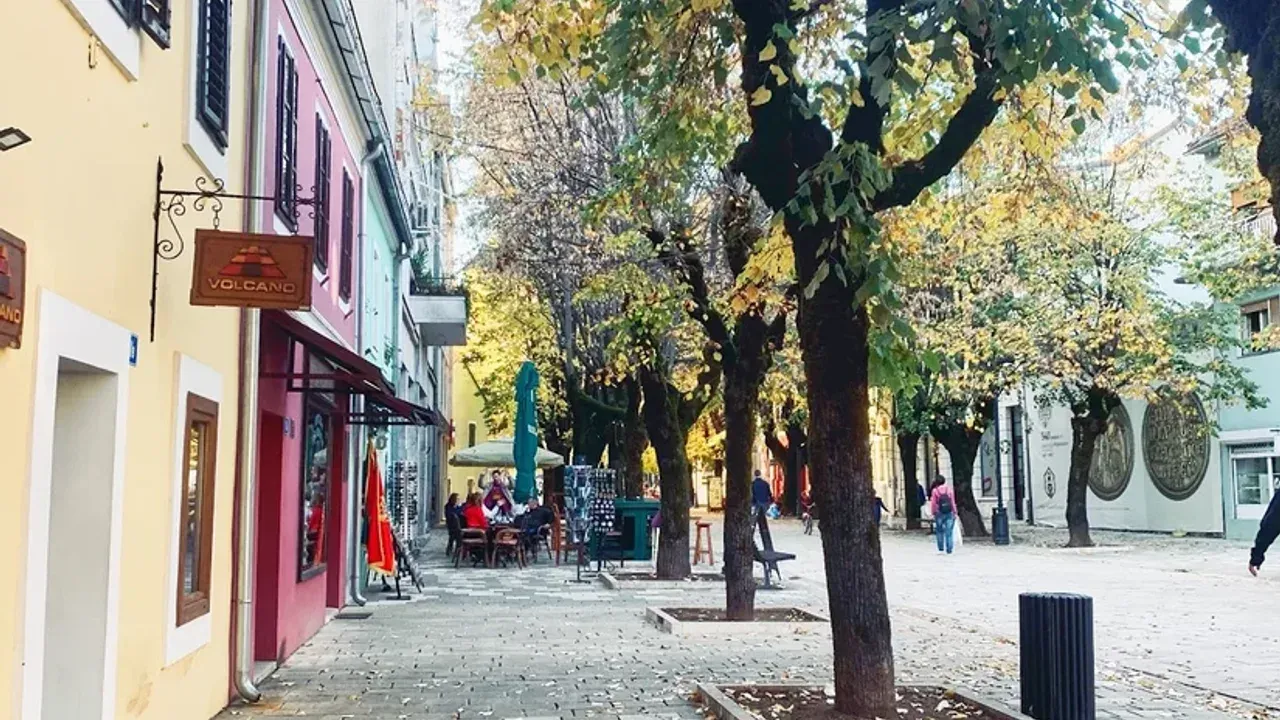
Founded in 1482 by Ivan Crnojević, lord of Zeta, who moved his capital here to the sheltered foot of Lovćen ahead of the Ottoman advance, Cetinje became the seat of Montenegro's rulers and, under King Nikola I Petrović-Njegoš at the turn of the 20th century, the diplomatic heart of a newly recognised kingdom. Foreign powers built legations here, and their handsome old embassy buildings still line the streets, a small mountain town that once punched far above its weight.
Though the modern capital moved to Podgorica, Cetinje remains Montenegro's honorary and cultural capital, home to the National Museum, the old royal court and a monastery that guards some of Orthodox Christianity's most revered relics. It's compact, walkable and utterly different in mood from the coast: no beaches, no marina, just history, plane trees and a slower pace.
Getting to Cetinje from Bečići
Cetinje sits up on the karst plateau behind the coast, so the trip is a climb inland rather than a coastal cruise. From Bečići you'll first reach Budva, then follow the main road up towards Cetinje, roughly 35 km and about 40–50 minutes each way, depending on traffic and how many photo stops the switchbacks tempt you into.
| Option | Rough cost | Notes |
|---|---|---|
| Self-drive / rental car | From ~€25/day + fuel | Most flexible; lets you add Lovćen or Njeguši easily |
| Taxi | Agree fare in advance | Convenient for a small group; fix the price before setting off |
| Organised tour | Varies by operator | Often bundled with Lovćen and Njeguši on a "Njegoš" mountain loop |
Many day tours combine Cetinje with Lovćen National Park and the food village of Njeguši, turning it into a full, satisfying day out. If you'd rather not drive the mountain roads, a tour on a platform like GetYourGuide or Viator is the low-stress option. Check current itineraries and prices directly. Self-drivers get the best of it, though: freedom to linger over a museum or a hillside view. See our getting here and practical info pages for car-hire and driving basics.
King Nikola's Palace and the National Museum
The town's headline sight is the Museum of King Nikola, housed in the former royal palace of Montenegro's last monarch. Its rooms are kept much as they were, portraits, weapons, medals, furniture and the trappings of a small but ambitious court, and it's the single best place to grasp how Montenegro governed itself before the world wars reshaped the map. In 2026 adult entry runs to around €8, with reduced rates for students and free entry for children under 12 (prices can change, so treat this as a guide, not gospel).
Cetinje's museums are grouped under the National Museum of Montenegro, and several sit within a short walk of one another:
- History Museum and Art Museum, housed in the grand former parliament building; around €5 adult for each.
- Njegoš Museum (Biljarda), the fortified 19th-century residence of poet-ruler Petar II Petrović-Njegoš, named for the billiard table he famously hauled up the mountain; around €5 adult.
- Ethnographic Museum, Montenegrin folk dress, crafts and rural life; around €4 adult.
If you plan to see several, a combined ticket covering all units is roughly €20 adult, worthwhile for a proper half-day of museum-hopping. Opening hours vary by season and by museum, so it's wise to check the National Museum's own listings before you go, especially outside high summer.
Cetinje Monastery
A few minutes' walk from the palace, Cetinje Monastery is a living religious site rather than a museum. Rebuilt over the centuries and tied to the ruling Petrović-Njegoš dynasty, it holds relics of deep significance to Orthodox Christians, most famously said to include the right hand of St. John the Baptist and a fragment of the True Cross, kept in the treasury and shown with due reverence.
Entry to the monastery is free, though donations are welcome and, as at Ostrog, modest dress is expected: cover shoulders and knees, and leave the beachwear at the coast. It's a quiet, atmospheric stop that rounds out the town's royal-and-religious story, and a reminder that Cetinje was as much a spiritual capital as a political one.
Pairing Cetinje with Lovćen and Njeguši
Because Cetinje is only a half-day in itself, it pairs beautifully with the mountains behind it, and doing so is what turns a good trip into a great one.
- Lovćen National Park rises just west of town, crowned by the Njegoš Mausoleum on the Jezerski Vrh peak at 1,657 m, said to be the highest mausoleum in the world. Designed by the sculptor Ivan Meštrović and completed in 1974, it's reached by a 461-step climb through a tunnel bored into the mountain; inside, a 28-tonne statue of the poet-prince sits beneath a canopy of gold mosaic, and the platform behind gives one of Montenegro's greatest panoramas, the Bay of Kotor, the Adriatic and much of the country on a clear day. Entry to the park is around €3 per person in 2026, with the mausoleum a further €8 adult (about €4 for children); the road up is winding but rewarding.
- Njeguši, on the Lovćen road, is the ancestral village of the ruling dynasty and the home of Montenegro's most famous prosciutto (pršut) and cheese. A tasting plate here, with a view down the valley, is the classic way to end the day.
Do all three, Cetinje, Lovćen and Njeguši, and you have a full, varied day of history, high mountain scenery and mountain food, all within an hour or so of the beach. If you're comparing bigger inland expeditions, note that Cetinje is far gentler than the far-north Durmitor and Tara Canyon trip, which really needs a full day or an overnight. For more inland ideas, see our day trips hub, and compare with the coast-hugging Kotor and Perast trip.
Practical tips
- Half a day is enough for the town itself; add Lovćen and Njeguši to fill a full day.
- Wear comfortable shoes, Cetinje is flat and walkable, but Lovćen's mausoleum means a long stair climb.
- Carry some cash for museum tickets, the monastery donation and a Njeguši tasting; card acceptance is patchy in smaller spots.
- Check museum hours ahead, particularly in shoulder season, when some units keep shorter days.
- Dress with the monastery in mind if you plan to go inside. A layer to cover shoulders is all it takes.
Frequently Asked Questions
How far is Cetinje from Bečići?
Cetinje is about 35 km inland from Bečići, roughly a 40–50 minute drive each way via Budva and up the mountain road. It's one of the closer day trips from the Budva Riviera, easily done as a half-day, or a full day if you add Lovćen National Park and the village of Njeguši.
How much does it cost to visit Cetinje's museums?
In 2026, the Museum of King Nikola costs around €8 for adults, with the History, Art and Njegoš museums roughly €4–5 each. A combined ticket covering all National Museum units is about €20 for adults. Children under 12 generally enter free. Prices can change, so check the National Museum's listings before you go.
Is Cetinje worth visiting from the coast?
For anyone interested in history, yes. As Montenegro's old royal capital, Cetinje offers the last king's palace, several museums and a revered monastery, all in a walkable mountain town. It's a complete change of pace from the beach and pairs naturally with Lovćen, making a rewarding half- or full-day trip.
Can you combine Cetinje with Lovćen and Njeguši?
Yes, and many people do. Lovćen National Park and its Njegoš Mausoleum sit just west of Cetinje, and the food village of Njeguši lies on the same mountain road. Together they make a full day of royal history, high-altitude views and Montenegrin ham and cheese, all within about an hour of Bečići.
Is Cetinje Monastery free to visit?
Yes, entry to Cetinje Monastery is free, though donations are welcomed. As a working Orthodox monastery holding revered relics, it asks visitors to dress modestly, shoulders and knees covered, no beachwear. It's a short walk from King Nikola's Palace, so it's easy to combine both on the same visit.