"Is Montenegro expensive?" is really two questions in one — expensive compared to what, and expensive for which kind of trip — and the honest answer runs both ways. On the Budva Riviera you can spend like you're in Dubrovnik or like you're in the Balkans, and the gap between those two holidays is enormous. Below is a real 2026 cost breakdown: daily budgets, sample prices you'll actually pay, and how the coast stacks up against Croatia and Western Europe. For where those euros go, see our practical info.
The short answer, with numbers
| Travel style | Rough daily budget (per person) | What it looks like |
|---|---|---|
| Budget | €40–60 | Guesthouse/apartment, konoba lunches, buses, free beaches |
| Mid-range | €80–140 | 3–4★ hotel, restaurant dinners, some paid sights, taxis |
| Luxury | €200+ | 5★ or resort, fine dining, private transfers, tours |
Montenegro uses the euro, and for most of Europe it reads as mid-priced, not cheap and not dear — clearly cheaper than Croatia or Western Europe, a touch more than Albania. The coast in peak July and August is the priciest slice; travel in the shoulder season and the same trip costs noticeably less. See our best time to visit Bečići for the seasonal swing.
Sample prices on the Budva Riviera (2026)
These are typical 2026 prices we cross-checked across cost-of-living and travel sources; treat them as guides, since tourist-front spots in Budva and Bečići run 20–30% above inland or local prices.
| Item | Typical price | Notes |
|---|---|---|
| Espresso / cappuccino | ~€1.50 / ~€2.20 | Cheaper away from the seafront |
| Draught beer (0.5 l) | ~€2.50–4 | Domestic; imported a little more |
| Inexpensive meal | ~€6–15 | Konoba lunch, ćevapi, burek |
| 3-course dinner for two, mid-range | ~€30–65 | More at a beachfront terrace |
| Street food portion + drink | ~€4–7 | Ćevapi, pljeskavica, burek |
| Beach sunbed set (2 + parasol) | ~€20–35 | High season; varies by spot |
| Local taxi | ~€1 start + ~€1–1.50/km | Higher on the coast in high season |
| Taxi/transfer Tivat Airport → Budva | ~€35–45 | Fixed/pre-booked |
| Rental car | from ~€25–30/day | Economy, booked ahead |
For getting around and car hire, see getting here and our car rental in Montenegro guide.
What sights actually cost
Montenegro's scenery is largely free — the beaches, the promenades, the viewpoints over Sveti Stefan — and the paid attractions are modest by European standards:
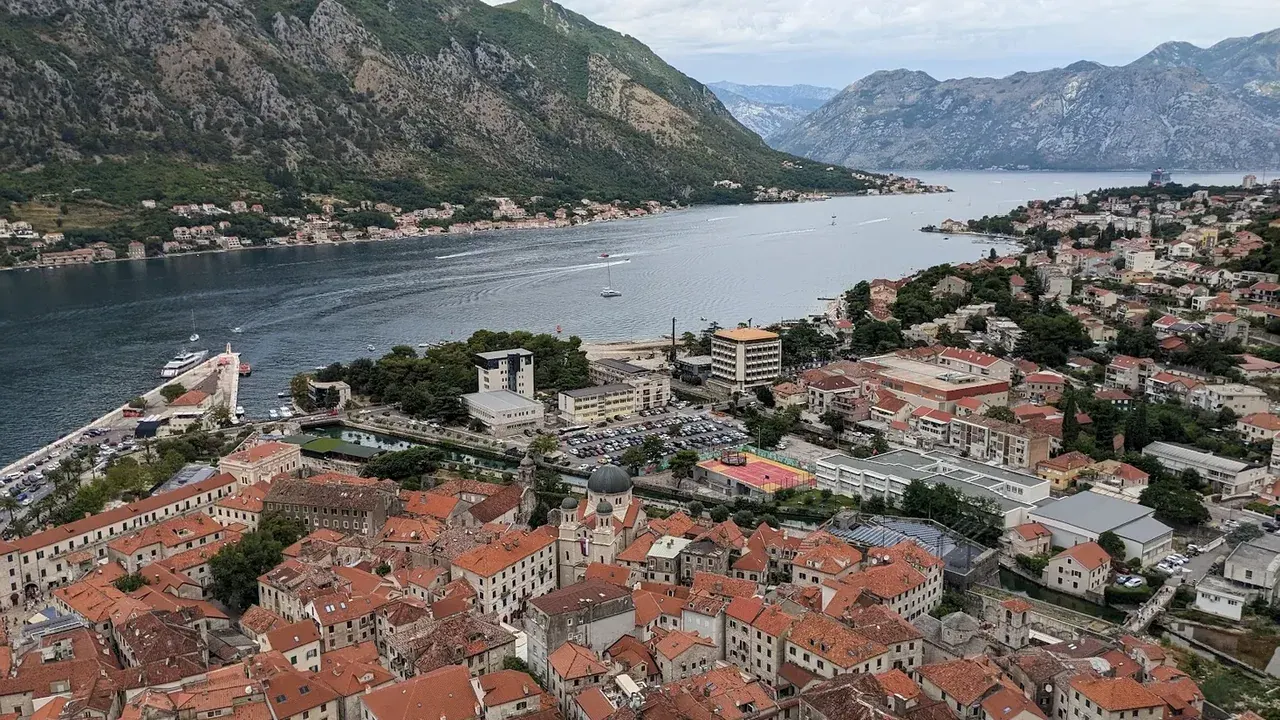
- Kotor city walls — around €15 in 2026, cash only, charged whenever the booths are staffed (roughly April–October, about 08:00–20:00 in peak summer; free in winter and before/after staffed hours). See our Kotor and Perast day trip.
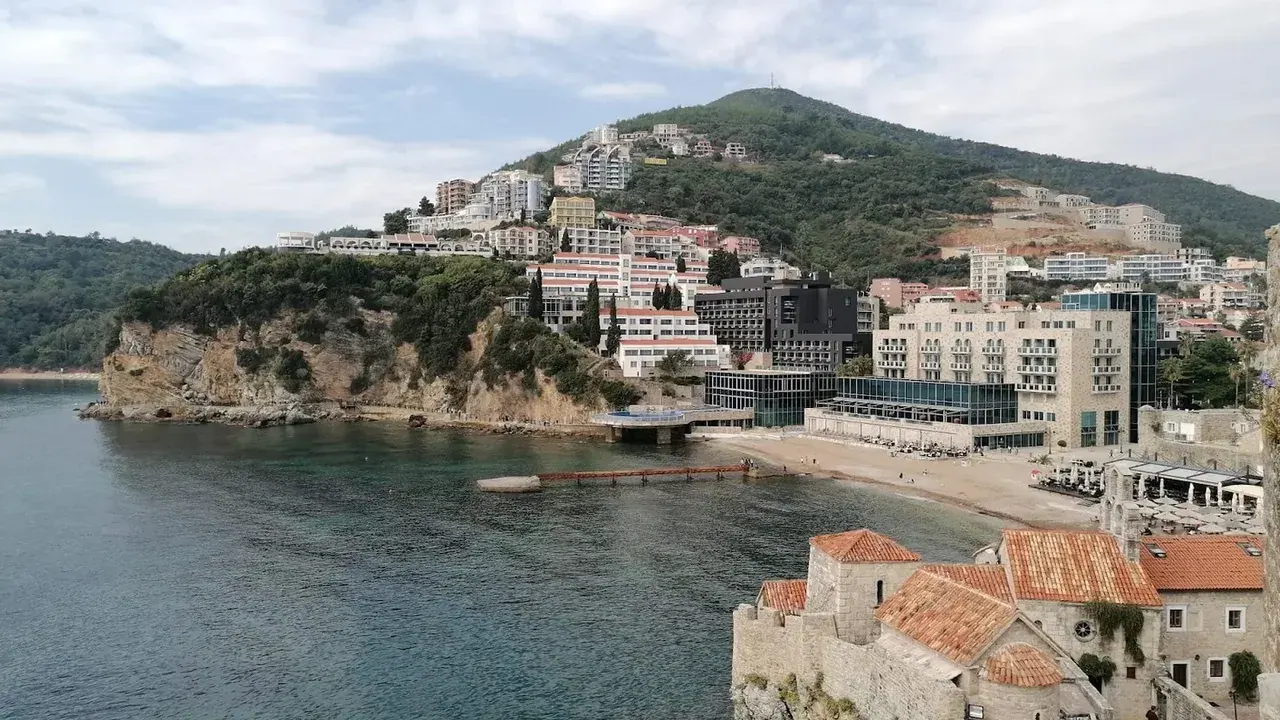
- Budva Citadela (old-town fortress) — about €3.50–5, cash.
- Ostrog Monastery — free; it runs on donations. See our Ostrog day trip.
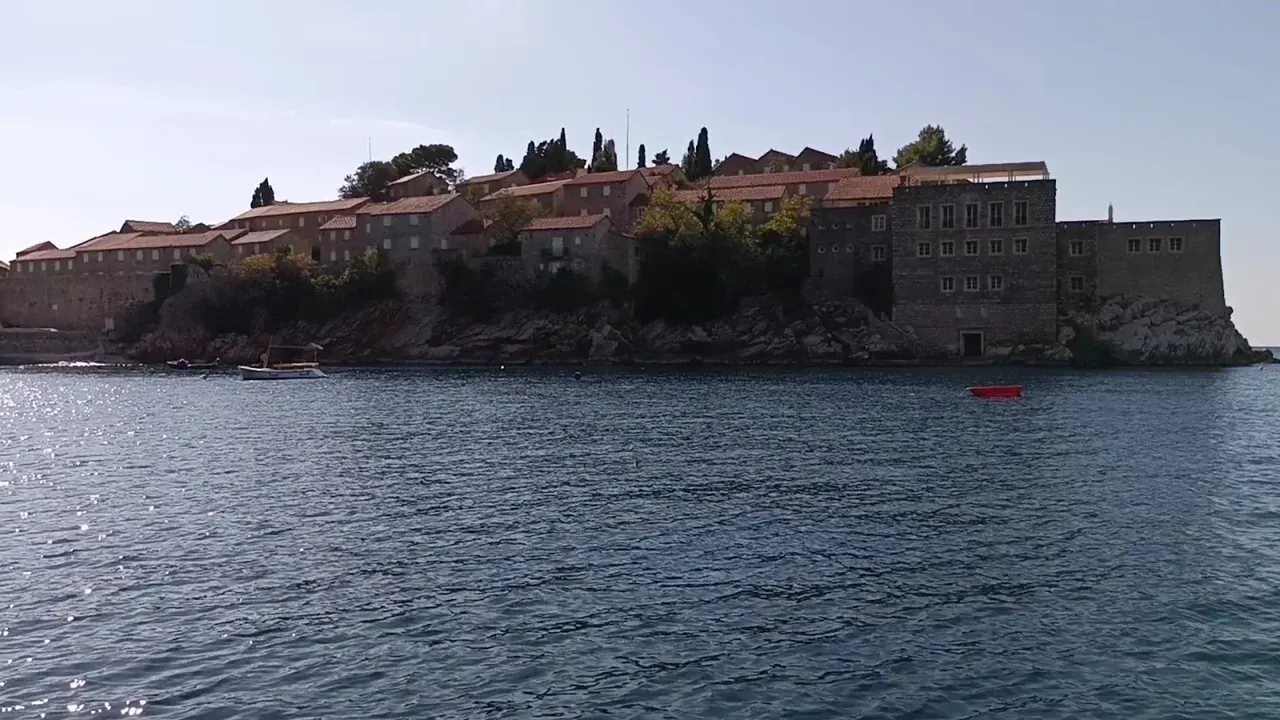
- Sveti Stefan — the islet itself is a private resort you can't enter, but the viewpoint — and, since the 2026 settlement reopened it, the public Sveti Stefan Beach beside it — are free.
Set that against Dubrovnik's city walls at around €40 in summer and the difference in "sightseeing tax" is stark — one of the clearest ways Montenegro undercuts its northern neighbour.
How it compares
This is where the "expensive?" question really gets answered — by comparison.
| Cost | Montenegro (Budva Riviera) | Croatia (Dubrovnik/Split) |
|---|---|---|
| Mid-range meal (pp) | ~€10–15 | ~€25–40 |
| Old-town walls ticket | Kotor ~€15 | Dubrovnik ~€40 |
| Coastal apartment (peak, night) | ~€60–90 | ~€120–180 |
| Rental car (summer, insured) | ~€30–50/day | ~€50–80/day |
Across the board, Montenegro comes out cheaper than Croatia — travel comparisons for 2026 put the same five-day coastal family holiday several hundred euros less in Montenegro than in Croatia, driven mostly by cheaper dining, accommodation and attraction tickets. Versus Western Europe (France, Italy, the Alps), the gap is wider still, especially on eating out and car hire. Versus Albania, Montenegro is a little dearer. For the full head-to-head, see Montenegro vs Croatia.
How to keep costs down
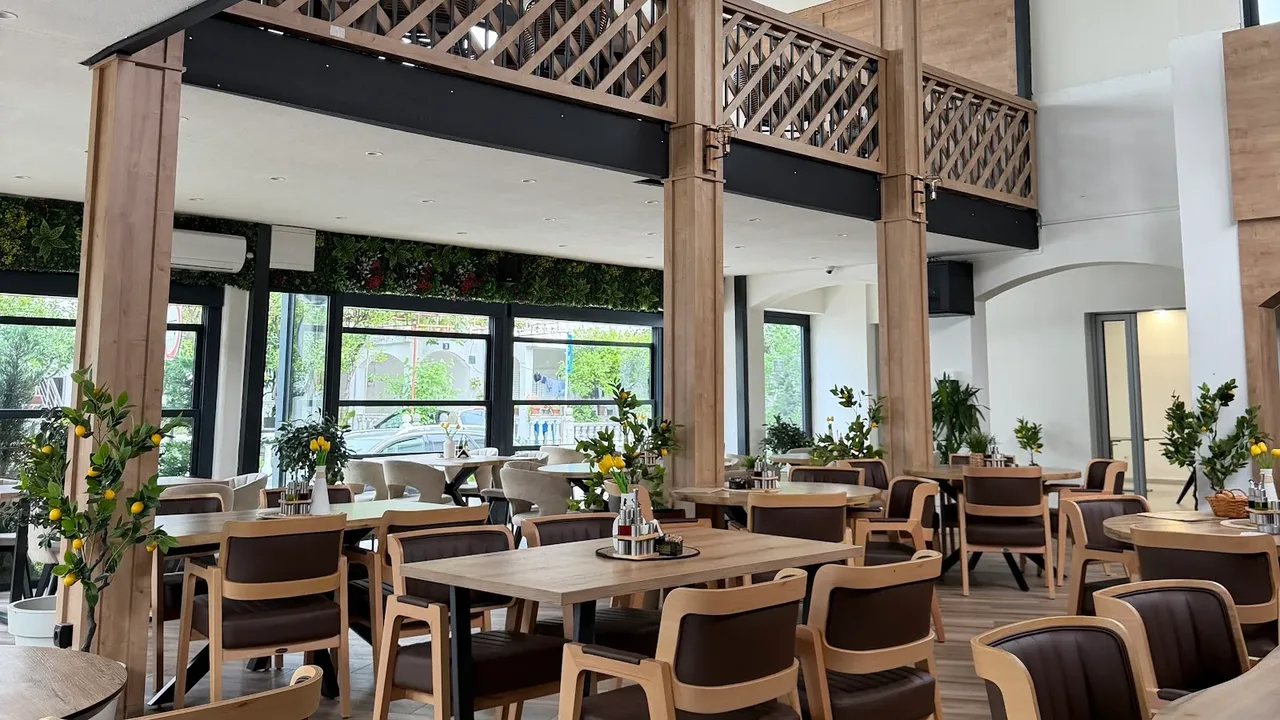
- Eat where locals eat. Move a street back from the beachfront and konoba prices drop; a €6–15 lunch inland can cost noticeably more on a sea-view terrace. See what to eat in Montenegro for the dishes worth ordering.
- Travel the shoulder season. May–June and September–October cut accommodation prices and crowds while the sea stays swimmable — see Montenegro in September.
- Use buses and walk. Intercity buses are cheap (a few euros), and Bečići to Budva is a free 3 km promenade stroll rather than a taxi.
- Lean on free scenery. Beaches, viewpoints and the Sveti Stefan panorama cost nothing; save the budget for one or two paid highlights like Kotor's walls. Our Bečići on a budget guide works the whole trip this way.
- Book car hire ahead. From roughly €25–30/day booked early, well below Croatia — but always check the insurance excess and fuel policy.
A budget traveller can genuinely do the Riviera on €40–60 a day; a mid-range couple should plan around €80–140 each per day; and only the five-star, fine-dining, private-transfer version pushes past €200. Where you land is a choice, not a fixed price.
A sample week on the Budva Riviera
To make the daily figures concrete, here's roughly how a mid-range week for two might add up in peak season — a realistic middle path between backpacking and five-star, using the sample prices above.
| Item | Rough weekly cost (2 people) |
|---|---|
| 3–4★ hotel or apartment, 7 nights | €500–900 |
| Dinners out (mixed konoba/terrace) | €250–450 |
| Coffees, drinks, lunches | €150–250 |
| Sunbeds and beach extras | €70–150 |
| A couple of day trips / tickets | €60–120 |
| Local taxis and a bus or two | €40–80 |
That lands most mid-range couples somewhere around €1,100–1,900 for the week on the ground, before flights and car hire — comfortably less than the equivalent in Croatia. Trim the hotel and eat where locals eat and you drop toward the budget end; add a rental car (from ~€25–30/day), private transfers and fine dining and you climb toward luxury. The single biggest lever is season: the same week outside July and August can cost meaningfully less on accommodation alone.
Cash, cards and tipping
A few practical notes that affect what you actually spend:
- Carry some cash. Montenegro uses the euro, and while hotels and larger restaurants take cards, many konobas, market stalls, sunbed attendants and both Kotor's and Budva's fortress ticket booths are cash-only. Keep small notes handy — our guide to money and ATMs in Montenegro covers withdrawal fees, card acceptance and the currency-conversion trap at the ATM screen.
- Tipping is modest. Rounding up or leaving around 10% for good restaurant service is normal and appreciated, not obligatory.
- Montenegro is outside the EU. That matters less for money than for phones — an EU SIM may incur roaming charges here, since roam-like-at-home doesn't yet apply, so check your plan or budget for a local SIM. See our practical info for the details.
- Watch the seafront markup. The 20–30% premium on tourist-front cafés is the easiest cost to avoid — walk one street back.
So — is it good value?
For what you get, the Budva Riviera is genuinely good value in 2026. You're on the same Adriatic as Croatia and Italy, with medieval old towns, a UNESCO bay and a long sandy beach, yet paying Balkan prices for meals, tickets and taxis rather than Western-European ones. The coast isn't "cheap" in the backpacker sense — peak-season beachfront hotels and sea-view terraces command real money — but the floor is low and the ceiling is optional. That combination is the honest answer to "is Montenegro expensive?": no, unless you choose the expensive version. Plan your base with our where to stay in Bečići guide, and the country rewards a modest budget better than most of the Mediterranean.
Frequently Asked Questions
Is Montenegro expensive to visit in 2026?
Not particularly. Montenegro uses the euro and sits mid-priced for Europe — clearly cheaper than Croatia and Western Europe, slightly dearer than Albania. On the Budva Riviera, budget travellers manage on roughly €40–60 a day, mid-range visitors €80–140, with peak July–August the priciest and the shoulder season noticeably cheaper.
How much does a meal cost on the Budva Riviera?
An inexpensive konoba meal or street food runs about €6–15 per person, while a three-course dinner for two at a mid-range restaurant is roughly €30–65 — more on a beachfront terrace. Moving a street back from the seafront, where prices run 20–30% higher, saves a useful amount over a week.
Is Montenegro cheaper than Croatia?
Generally yes. For 2026, comparable coastal holidays come out several hundred euros cheaper in Montenegro, mainly on dining, accommodation and attractions — a mid-range meal is around €10–15 versus €25–40 in Dubrovnik, and Kotor's city walls cost about €15 against Dubrovnik's roughly €40 (summer).
How much is a daily budget for Bečići?
Plan on roughly €40–60 per person a day for a budget trip (apartment, konoba meals, buses, free beaches), €80–140 for mid-range (a 3–4★ hotel, restaurant dinners, some paid sights and taxis), and €200 or more for a luxury stay with five-star hotels, fine dining and private transfers.
What do attractions cost in Montenegro?
Most scenery is free — beaches, promenades and viewpoints. Paid highlights are modest: Kotor's city walls are around €15 (cash, in season), Budva's Citadela about €3.50–5, and Ostrog Monastery is free on a donation basis. That's well below comparable Croatian sights like Dubrovnik's walls at roughly €40 in summer.