At a glance
| Detail | |
|---|---|
| What it is | UNESCO-listed Bay of Kotor + walled medieval city at its head |
| From Bečići | ≈25 km · 30–40 min by road |
| Old town | Free to wander — Venetian-era palaces, churches, cathedral |
| Fortress climb | San Giovanni — ~1,350 steps, 45–60 min; ~€15 cash when staffed (Apr–Oct); free early/late & winter |
| Cable car | Kotor–Lovćen (Dub → Kuk, 1,348 m) ~11 min, ~€15–22 return |
| Best time | Morning, before the day boats and cruise crowds |
| Time needed | Full day (pairs with Perast, 12 km) |
The UNESCO showpiece
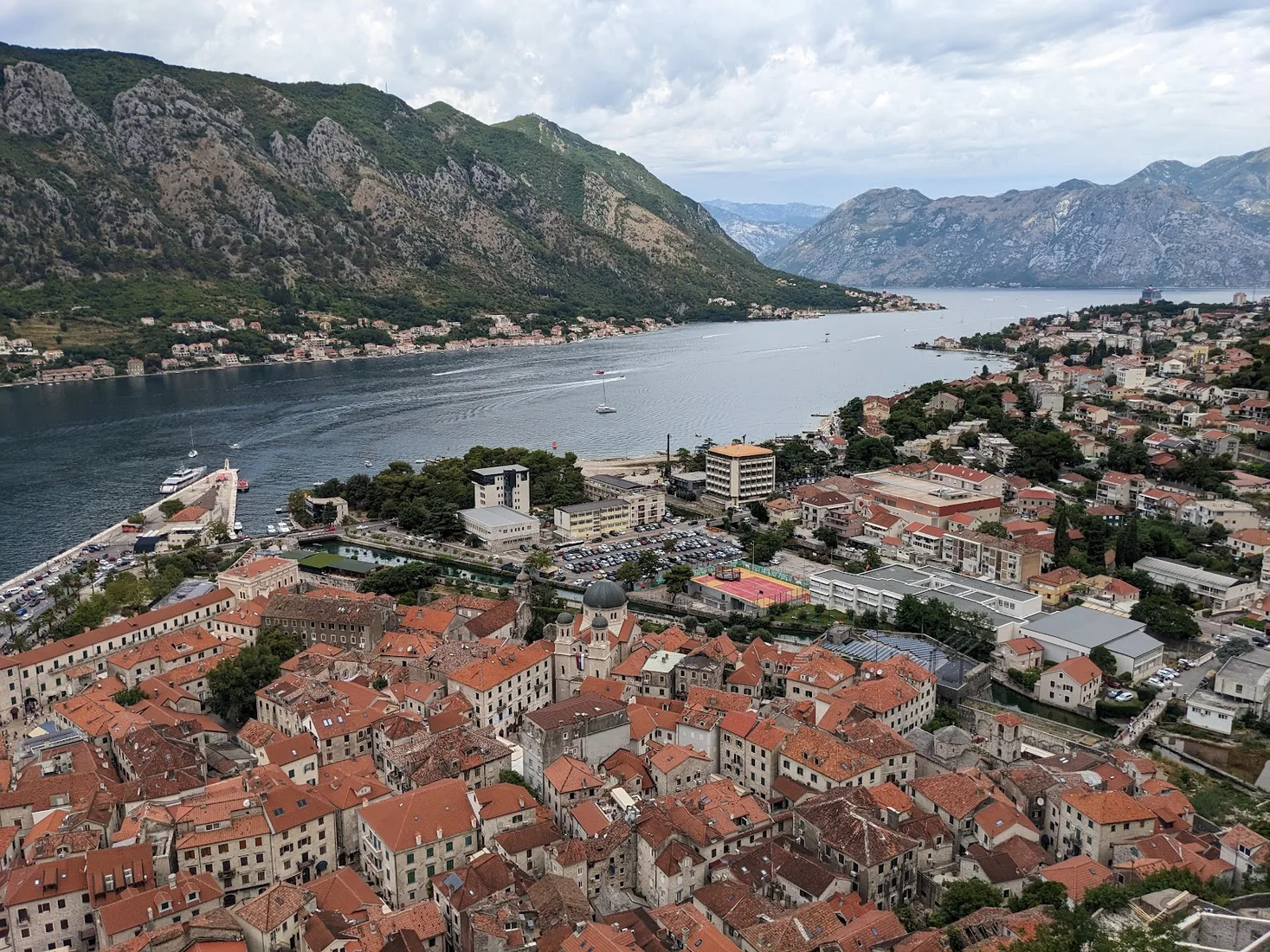
Roughly 30–40 minutes up the coast (Kotor town is about 25 km; allow extra in peak-summer traffic), the UNESCO-listed Bay of Kotor is a fjord-like inlet ringed by mountains — often called Europe's southernmost fjord, though it's really a ria, a drowned river canyon rather than a glacier-carved one — with a walled medieval city at its head. Kotor's old town flourished under nearly four centuries of Venetian rule (1420–1797), which shaped its palaces, churches and the fortifications climbing the mountain, and it has been a UNESCO World Heritage Site since 1979. The old town is free to wander — an hour or two of drifting through its lanes and squares to the cathedral is the easy, everyone-can-do-it version of the visit. Look out for the cats: descendants of the felines sailors brought to this trading port, now the town's unofficial good-luck symbol.
The fortress climb
The signature experience is the climb up the city walls to the fortress of San Giovanni — roughly 1,350 steps and 45 minutes to an hour up, rewarded with the classic sweeping view over the terracotta roofs and the bay. This is a paid climb of around €15, cash only, charged whenever the booths are staffed — roughly April–October, about 08:00–20:00 in peak summer and shorter in the shoulder months; before opening or after closing the booths are unstaffed and the climb is generally free, and in winter it is free too. Go early or late — for a free sunrise climb, and because midday sun on the exposed stone is brutal — wear proper shoes, and bring water.
Pair it with Perast
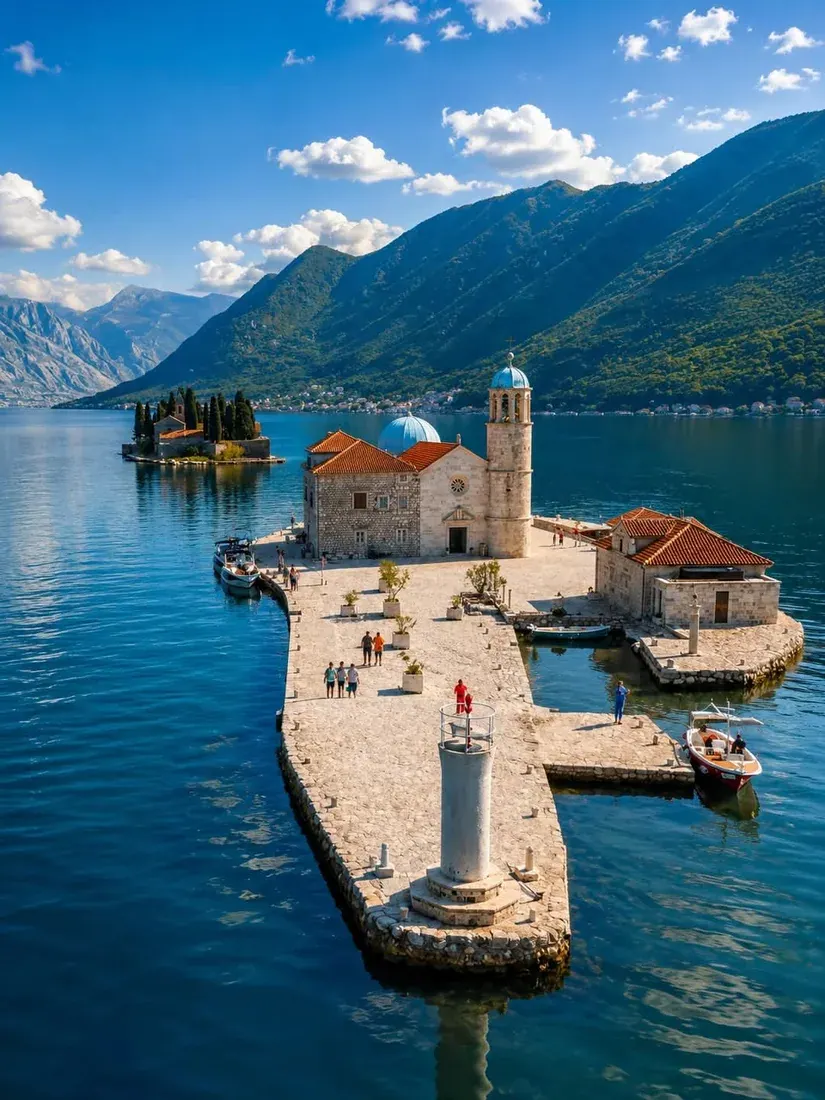
Kotor combines naturally with the baroque village of Perast, just 12 km further up the same bay, with its boat out to Our Lady of the Rocks. A full day covers both comfortably by car, bus, taxi or organised tour — or see the whole fjord-like bay from the water on a Bay of Kotor boat tour. If you are weighing Kotor as a base instead of Bečići, see our Bečići vs Kotor comparison.